


ЖД Билеты Онлайн
4.327.00 Reviews
App Specs
- Version
- 47.0.10687
- Updated On
- License
- Free
- Downloads
- 1,000,000+
- Developer
- UFS ltd.
- Categories
- Travel & Local
- Platform
- Android
Screenshots
 Analysis by AppCompare
Buying a train ticket is one of those tasks that looks simple until the departure date is close, the useful seats are disappearing, and you are trying to compare several services at once. ЖД Билеты Онлайн is built for that exact moment: it is a free Travel & Local app from UFS ltd. that lets me search for and purchase railway tickets in Russia, including routes served by Sapsan, Lastochka, and Strizh. After using it, I see its main value less as a travel companion and more as a focused booking tool that can become part of a regular travel routine.
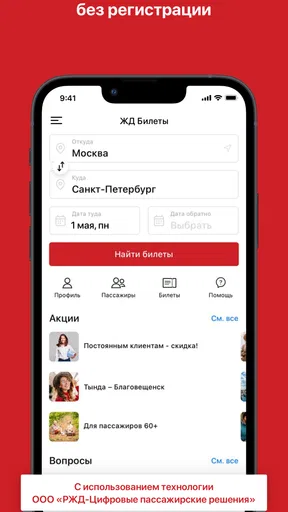
Its first impression is practical rather than exciting. I open it when I already know I need a train, enter the journey details, inspect the available options, and move toward payment without having to navigate a broad travel marketplace. That narrow purpose is a strength for people who regularly travel by rail. It is also the reason some users may eventually return to a general travel service instead: this app makes most sense when railway tickets are the center of the task.
What makes the first week useful
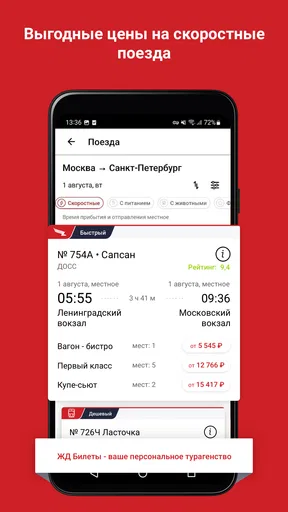
During the first week, the appeal comes from reducing a familiar chore to a repeatable sequence. Instead of visiting a station or switching between unrelated booking services, I can handle the search from my phone. For a planned trip between Russian cities, that matters most when I want to compare departure times and train types before committing. The inclusion of recognizable services such as Sapsan, Lastochka, and Strizh makes the app especially relevant to passengers who already choose those trains.
I would not describe the experience as a discovery platform for spontaneous holidays. Its job is more direct: find a suitable railway journey and buy the ticket online. That focus helps when I am booking a known route, but it gives me less reason to open the app when I am still deciding where to go. A general travel app may be better at combining trains with hotels, flights, maps, and destination planning, while this one is more comfortable when the railway leg is already clear.
One useful habit is to search with the whole journey in mind rather than simply selecting the earliest departure. A slightly later train can offer a better balance between arrival time and comfort, while a high-speed option may be worthwhile for a short business trip but unnecessary for a relaxed visit. I found that the value of the app comes from making these comparisons in one booking flow, not from encouraging me to browse endlessly.
The app is free to use, which lowers the barrier to keeping it installed even if I only travel by train occasionally. Its age rating is Everyone, so it is presented as a broadly accessible travel utility rather than a specialist tool for a narrow professional audience. The current version is 47.0.10687, and the app supports devices running Android 6.0 or newer. That compatibility is useful for people who keep an older phone as a backup, although the actual comfort of using any booking app still depends on the device and its software condition.
Its public reception also suggests that it has moved beyond being a little-known experiment: the app has an average rating of 4.3 from around twenty-three thousand ratings and has passed one million installs. I treat those figures as a sign that the basic booking idea works for many people, not as a guarantee that every route or payment attempt will feel equally smooth. Travel apps are judged in stressful moments, and a single awkward booking can matter more than a generally pleasant browsing session.
Worth Reading Before You Choose

EA SPORTS FC Mobile 26 Is a Bigger Football Game, but It Takes Time

Flipboard Shows What News Apps Must Do Beyond the Feed

Switching to Android Auto Means Rethinking Your Driving Routine

Google Calendar Makes a Crowded Week Easier to Manage

Ludo King Makes the Most of the Minutes Between Plans

Baby Panda World Brings Quick Play to Modern Phones, but Its Game Library Feels Busy
A realistic booking routine
Imagine I am arranging a weekend trip and need to leave after work on Friday. I would first search the route, then compare the available departures instead of immediately choosing the first result. If Sapsan, Lastochka, and another suitable service appear for the same broad journey, I would weigh speed against timing and price before selecting a train. Once I have made the decision, the benefit is that the purchase happens in the same place where I made the comparison.
That workflow is particularly helpful when I am booking for another person. I can confirm the exact travel date and departure before entering passenger details, which reduces the chance of buying the wrong journey in a rush. My practical advice is to slow down at the final review stage: check the city, station, date, departure time, and passenger information before paying. The app can simplify ticket buying, but it cannot protect me from choosing the wrong route because I was distracted.
Another non-obvious advantage is psychological rather than technical. A dedicated rail app can become a single place to begin every train trip, so I do not need to remember which website or service I used last time. That consistency is valuable for frequent travelers. The trade-off is that a dedicated routine can make me less likely to compare the same journey with other channels, so I would still check alternatives when the trip is expensive, unusually complex, or time-sensitive.
Why it can remain useful from month to month
The real test is not whether the app helps with one purchase. It is whether I still want it on my phone after the novelty of trying it has disappeared. For regular rail passengers, the answer is more likely to be yes. A focused tool earns its space when it supports recurring behavior: commuting between cities, visiting family, taking regular business trips, or arranging several journeys during a busy period.
Its recurring value comes from familiarity. Once I understand the search and purchase flow, I can return to it without relearning a large travel platform. That matters when I am booking late at night, standing in a station, or handling travel arrangements during a workday. The app is not trying to be my complete travel organizer; it is useful because it keeps one repeated job relatively close at hand.
For occasional travelers, the calculation is different. Since the app is free, keeping it installed costs little beyond storage and attention, but an occasional user may prefer a service already used for flights or accommodation. If train travel is only a small part of my trips, opening a separate rail-focused app may feel like an extra step. In that case, the convenience of one broader platform can outweigh the specialized focus here.
I also see value when planning more than one passenger or more than one journey. A dedicated railway search makes it easier to remain focused on train schedules rather than becoming distracted by hotel offers or destination promotions. I can first settle the transport plan, then handle the rest of the trip separately. This is a good fit for people who already know where they are staying and simply need dependable rail access.
At the same time, I would not rely on it as my only source of travel awareness. A booking app is strongest when I know the route I want. It is less useful for discovering alternative airports, buses, car rentals, or multi-city combinations. If a train is sold out or the timing is poor, a wider travel search may reveal another way to make the journey. The best long-term role for this app is therefore as a rail-booking specialist, not as a universal replacement for every travel service.
Where it fits beside the usual alternatives
Compared with buying at a station, online booking is more convenient because I can search from home and make a decision before reaching the platform. It also gives me more time to think about departure choices instead of making a rushed purchase at a ticket counter. The station still has an advantage when I need in-person help, have an unusual request, or feel more comfortable speaking with staff.
Compared with a general travel marketplace, this app has a clearer purpose. I am less likely to wade through flights and accommodation when all I need is a Russian railway ticket. The broader service wins when I want a complete itinerary, a combined search, or a single place to manage several kinds of transport. I would choose ЖД Билеты Онлайн for a train-first task and a general platform for a trip that involves several moving parts.
Compared with a mobile browser, the app can feel more natural for repeat use because it is already positioned as a rail-ticket tool. The browser may still be preferable on a shared device, when I do not want another app installed, or when I need to compare several independent sources in separate tabs. In other words, the app earns a place through convenience and habit, not because every traveler must abandon other methods.
What can create fatigue over time
The biggest source of fatigue is the tension between urgency and responsibility. When I am booking a popular departure, I want to move quickly, but railway travel rewards careful checking. A small mistake in the route or date can undermine the convenience of online purchase. I therefore see the app as a tool that shortens the process, not one that should encourage careless speed.
Another possible frustration is that a focused ticket app may not answer every question surrounding the trip. I may still need another source for local transport, station navigation, accommodation, or broader itinerary planning. That is not a flaw in the core booking purpose, but it affects how much space the app deserves on my phone. Users expecting a complete travel dashboard may find the experience narrower than expected.
Repeated bookings can also make any interface feel routine. The same focused flow that helps me on the third trip may feel limited if I want inspiration or richer planning tools on the tenth. For me, that is acceptable because I would rather have a straightforward rail utility than a crowded app when I already know the journey. Someone who enjoys exploring destinations may feel differently.
Maintenance, trust, and the habit of keeping it installed
Maintenance is relatively easy to judge from a user’s point of view: the app has been available since March 10, 2013, and it continues to have a current release, which is version 47.0.10687. That long presence gives me more confidence than a newly launched booking tool would. It suggests an established product that has had time to remain relevant in a changing mobile environment, although I still recommend keeping the app updated before an important trip.
My own maintenance routine would be simple. I would update it when an update is available, avoid making a first-ever booking minutes before departure, and keep the confirmation details accessible after purchase. I would also check the route carefully again after payment rather than assuming that a successful transaction means every personal detail was entered correctly. These habits are not glamorous, but they are what turn a convenient app into a dependable travel routine.
Because the app handles a purchase rather than merely displaying schedules, I would use it most confidently when my phone has a stable connection and enough battery. I would not begin an important booking while rushing through a station with unreliable connectivity if I had another option. The app can reduce friction, but the surrounding conditions still matter. A calm booking made earlier is safer than a hurried booking made at the last possible moment.
There is also a sensible reason to keep a second channel in mind. If the app does not suit a particular journey, I would compare with a station, a browser, or a broader travel service rather than forcing the booking through one method. This is especially important for complicated itineraries, unusual passenger arrangements, or trips where a missed connection would be costly. The app is a strong primary option for ordinary rail purchases, but flexibility remains part of good travel planning.
For people concerned about whether it is suitable for their device, the Android requirement begins at version 6.0. That makes it approachable for many older Android phones, though I would still consider screen size and general performance before using an aging handset for a time-sensitive purchase. The app is free, so trying it for a normal route is a low-risk way to decide whether its workflow suits me.
Who should keep using it
I would recommend keeping it installed if I regularly travel by train in Russia, especially when Sapsan, Lastochka, or Strizh are part of my usual choices. It is also a good match for someone who prefers a dedicated tool over a large travel marketplace, or for a person who often books tickets for family members and wants a familiar process.
I would be more cautious about recommending it to someone who rarely takes trains, plans international journeys, or wants one app to combine rail, air travel, hotels, maps, and activities. That traveler may gain more from a broader service, even if it is less focused. Likewise, anyone who strongly prefers in-person assistance should continue using a station or another channel when a booking feels complicated.
One practical tip is to treat the app as the beginning of a checklist, not the entire checklist. Search and purchase the rail ticket there, then separately confirm the station location, local transfer, and arrival plan. This avoids a common mistake: assuming that solving the ticket automatically solves the whole journey. The app is most valuable when I give it a clear job and do not ask it to become something else.
My long-term verdict
ЖД Билеты Онлайн earns lasting space on my phone when train travel is a recurring part of my life. Its strongest quality is not novelty; it is repeatability. I can return to a focused rail-booking workflow, compare suitable departures, and purchase online without turning a simple railway task into a full travel-planning project. That is a modest promise, but it is a useful one.
I would not call it the best choice for every traveler. A broad marketplace is better for mixed transport and complete itinerary planning, while a station can be better for personal assistance. The app can also feel limited when I want destination discovery or support beyond the ticket itself. Those boundaries are worth accepting only if my main need is buying Russian train tickets efficiently.
My final recommendation is positive, with one condition: use it deliberately. Check the journey details, keep another option in mind for unusual trips, and do not confuse a streamlined purchase with complete travel management. For frequent rail passengers, the free price, established history, and focused coverage make it a practical long-term utility. For everyone else, it is worth trying when a train trip appears, but it may not need to become a permanent part of the daily app collection.
The lasting value is simple: when Russian railway travel is a repeated task, a dedicated booking habit can save more effort than a feature-packed alternative.
Pros
- Compare train routes
- schedules
- and fares in one place.
- Book tickets remotely without visiting a station or ticket office.
- Useful passenger and train details are shown before payment.
- Digital tickets make boarding more convenient on supported routes.
- Saves time with quick access to previous searches and bookings.
Cons
- Some routes or ticket types may be unavailable in the app.
- Service fees can increase the final price of a ticket.
- Refund rules may be difficult to understand for some bookings.
- The interface may feel less intuitive for first-time users.
- Reliable internet access is needed for searches and online booking.
FAQs for ЖД Билеты Онлайн
What is ЖД Билеты Онлайн and what can I use it for?
ЖД Билеты Онлайн is a railway ticket booking app designed to help users search for train routes, compare available departures, check schedules, and purchase tickets from a mobile device. It is mainly useful for planning domestic rail journeys, viewing carriage and seat availability, and keeping booking information in one place instead of visiting a station or using a desktop website.
Can I search for trains and check ticket availability in the app?
Yes. The app allows you to enter a departure station, destination, travel date, and passenger details to find suitable train services. Search results generally include departure and arrival times, journey duration, train numbers, carriage types, and available seats. Before making a final decision, carefully verify the stations, date, passenger information, and fare because availability and prices can change quickly.
How do I buy a railway ticket through ЖД Билеты Онлайн?
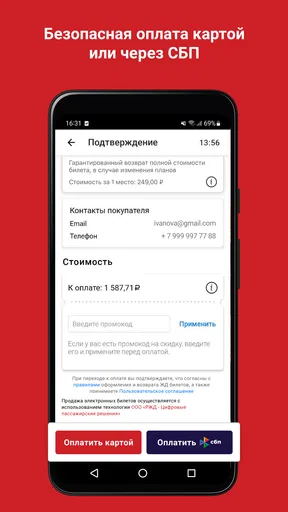
After selecting a train, you usually need to choose the carriage and available seat, enter the passenger’s identification details, and complete payment using one of the supported methods. Review every detail before confirming the order, especially the passenger name, document number, route, and travel date. Once payment is accepted, the electronic ticket or booking confirmation should be available in the app.
Can I cancel or change a ticket purchased through the app?
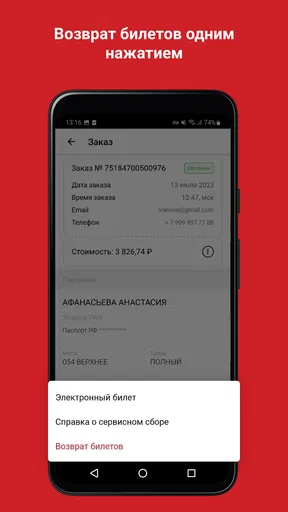
Cancellation and change options depend on the railway operator, ticket type, departure time, and the terms shown during booking. Some tickets may be refundable with a deduction, while others can have strict restrictions or deadlines. Open the order details in the app to review the applicable rules before requesting a refund. Processing times and returned amounts may also vary by payment provider.
What should I check before downloading and using the app?
Before downloading ЖД Билеты Онлайн, check whether it supports your country, railway network, preferred payment method, and language. You should also review the developer information, recent user feedback, privacy permissions, and the app’s update history. A stable internet connection is recommended for searching and purchasing tickets, and you should save your booking confirmation so it remains accessible when boarding.


